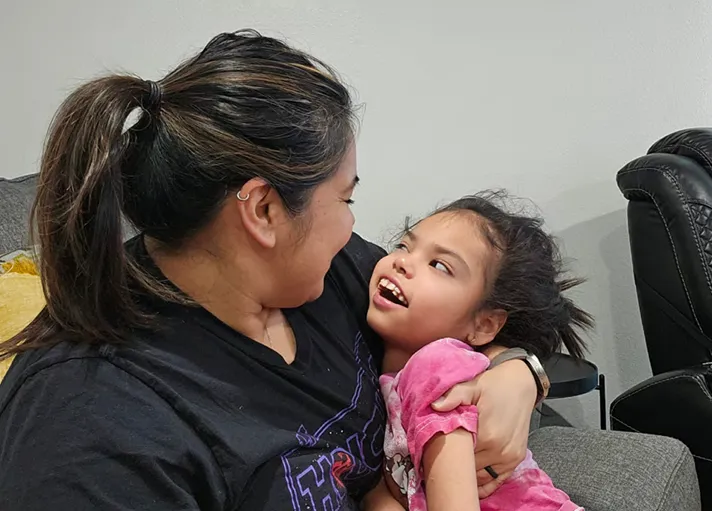
Gigi is ten years old. She lives with her mom Yasmin, dad Jesus, and big sister Alli in a small military town where, as her parents say, “everyone knows everyone – especially Gigi.” She is known for her love of music, her bright smile when she hears familiar voices, and her very clear preferences: sleeping in, head massages, cheesecake, chocolate ice cream – and Chipotle. But Gigi’s life, and her family’s, has also been shaped by a RARE Neurological condition: CDKL5 Deficiency Disorder (CDD).
Gigi was just six months old when her parents received the diagnosis, three months after her first seizure. Yasmin and Jesus remember the moment clearly.
“It was overwhelming. We felt lost and wanted to know everything we could. Our first thought was simply: what kind of life will our daughter have?”
Trying to understand CDD, Yasmin often uses a simple analogy.
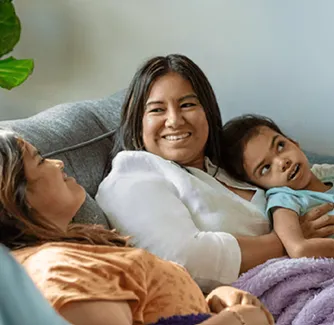
“Think of baking a cake,” she explains. “You follow a recipe, with precise ingredients and measurements. If something is missing or off, the cake won’t turn out right. Those ingredients are chromosomes. In Gigi’s case, her chromosomes didn’t have what her brain needed to prevent seizures.
CDD affects every child differently. For Gigi, it means complete dependence on others for daily care. She does not speak or cry, which makes it difficult for her parents to know when something is wrong. She uses a wheelchair and needs carefully adapted environments to stay safe and comfortable.
Daily life requires constant planning. Medications must be given three times a day, meals need to be timed carefully, and food allergies must always be considered.
Travel involves checklists that include a chargeable blender, safe food options, accessibility for her wheelchair, and precise medication schedules. Missing a meal or a dose can lead to breakthrough seizures.
Despite the challenges, Gigi’s days are filled with routines that bring her joy. During the week, she goes to school, riding the bus with her paraprofessional, who has been by her side since first grade and is considered part of the family. At school, Gigi enjoys music, art, modified physical education, and therapy sessions. After school, she rests, has dinner, and relaxes in the comfort of home.
Weekends are slower. Gigi loves to sleep in and wakes up smiling. Sometimes the family drives to Los Angeles for a movie or a visit to the mall. Movie theaters with reclining seats and ice cream menus are a particular favorite.
Support has been essential. The family leans on each other, on a trusted neurologist who listens and provides guidance, on Gigi’s school team, and on parent communities such as the CDKL5 support groups, where shared experiences bring understanding, advice, and sometimes laughter.
What Yasmin and Jesus wish more people understood is simple, yet profound.
“It’s hard. Even when it looks like we have it together, it’s draining – emotionally and physically. And every family’s experience with this disorder is different.”
They also hope people see Gigi for who she is.
“She likes to interact with people. She shouldn’t be treated like she’s invisible. When people talk to her, when they encourage their kids to say hello – that means everything to us.”
Gigi’s life is shaped by a rare disease, but it is also filled with connection, personality, and moments of happiness. Her story is one of complexity, care, and above all, humanity.